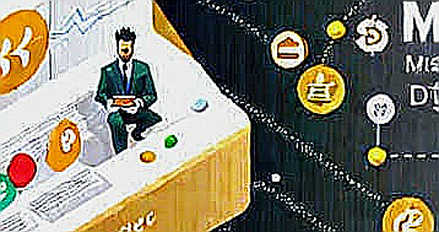
The floor just jumped. Nine point two ETH. Up twenty percent in twenty-four hours. Four thousand four hundred forty-four digital stockbrokers, each one preloaded with something we haven't seen in the PFP circus in years: actual equity exposure. TSLA. AMZN. NVDA. AAPL. Not an airdrop promise. Not a governance token that might do something someday. Tokenized stock, sitting inside an ERC-6551 token-bound account, waiting for you to burn a meme coin to unlock it.
The tape doesn't lie about the move. 1,734 ETH in cumulative OpenSea volume. A floor spike that happened BEFORE the headlines hit. Somebody knew. Somebody always knows.
But here's what the celebration threads on X aren't telling you. This isn't a technical breakthrough. It's a narrative assembly — four separate trust assumptions welded together and painted with the word "innovation." And when I see projects like this, I don't look for the upside first. Based on my years running market surveillance and sitting through every cycle from ICO mania to the NFT winter, I look for failure modes. They're always there. You just have to read the tape past the price.
Let me explain what we're actually looking at, because the marketing materials are designed to make this sound more novel than it is.
StonkBrokers is an NFT collection on Ethereum — 4,444 ERC-721 tokens featuring "stockbroker" characters. The PFP art is the least interesting piece of the puzzle. Each NFT is bound to an ERC-6551 token-bound account. For the uninitiated: ERC-6551, launched in 2023, lets an NFT own assets. It gives every NFT a smart contract wallet — its own address, its own balance, its own ability to hold and receive tokens independent of whoever owns the NFT in their external wallet. That's the technical foundation of everything this project promises.
Preloaded into that TBA? Tokenized shares of some of the most liquid equities on Earth. Tesla, Amazon, Nvidia, Apple. The actual mechanics of how those shares were sourced, issued, custodied, or verified? Not disclosed. The reporting on this project comes from a single source: the project team's own description, relayed through a media outlet. No contract addresses for the stock tokens. No issuer identified. No audit from a recognized security firm. No team background. The mechanism section of the pitch is unaudited self-reporting.
The interaction flow works like this. Users swap STONKBROKER — the project's meme coin — plus a small ETH fee through Anvil, an NFT AMM protocol, to mint a random StonkBrokers NFT. The swap rate is fixed: 666,666 STONKBROKER per NFT. It's a gacha mechanic — pull the lever, get your random broker, with the rarity distribution as disclosed or undisclosed as the team chooses. Then comes the activation mechanic. Holding the NFT isn't enough. You need to keep spending STONKBROKER to "activate" your NFT. Higher activation levels increase your weight in the stock reward distribution. Meanwhile, 70% of the trading fees from the Anvil AMM get converted into stock tokens and airdropped to activated wallets. Part of the activation fee is burned.
That's the loop. Meme coin in. NFT plus activation. Stock rewards from AMM fees. More activation. More meme coin demand.
It's a closed circuit. And that's exactly the problem.
Let me break down the technical risk surface, because the architecture is where this project looks clever and falls apart in the same breath.
The ERC-6551 dependency comes first. This standard is young. It went through extensive design-phase security review, but the ecosystem around it — wallet support, marketplace compatibility, key recovery, proxy deployment patterns — is still maturing. Security researchers have flagged TBA proxy ownership risks: if the registry has an upgrade path or a proxy implementation is initialized incorrectly, the assets inside a TBA can be compromised. StonkBrokers chose to park its entire stock reward system inside these young contracts. That's a bet on infrastructure that hasn't been battle-tested at scale.
The tokenized stock layer is the biggest hole in the story. Tokenized securities are not new. Platforms like Ondo Finance, Backed, and Securitize have been issuing tokenized equities and bonds for years. But StonkBrokers has not disclosed which platform, if any, it's using. If the project uses a regulated issuer with actual custody infrastructure, the stock rewards are real assets with legal backing. If the project built its own internal IOU system — a database entry "representing" TSLA — then the stock rewards are an accounting illusion. The entire value proposition of the collection depends on this answer. And the team has chosen silence. In my market surveillance experience, silence around asset provenance is one of the loudest red flags there is.
The Anvil AMM mechanics are the third risk layer. Anvil is an NFT AMM protocol designed to provide continuous liquidity for NFT collections. But the fixed swap rate — 666,666 STONKBROKER for one NFT — creates a structural arbitrage surface. If STONKBROKER's market price moves, or if the NFT floor price diverges significantly from the swap cost, arbitrageurs will attack the imbalance. The NFT AMM space is still in its infancy, and the parameterization of these pools — fees, slippage, rebalancing — is not a solved problem. We're watching novel market microstructure being stress-tested by the most aggressive actors in crypto.
The activation and burn mechanism is the fourth layer. The team burns part of the activation fee, creating deflationary pressure on STONKBROKER. But the burn ratio and the reward allocation algorithm are, you guessed it, undisclosed. Without transparency into the reward formula, there's no way to verify the system operates fairly. Gacha mechanics in NFT projects have a long history of exploiting opacity for house advantage. The only protection in a transparent world is verifiable code. And the code isn't verifiable here.
The security audit situation deserves its own paragraph. There is no audit. No mention of Trail of Bits, OpenZeppelin, CertiK, or PeckShield. In the aftermath of hundreds of millions of dollars lost to compromised protocols, an unaudited project handling both synthetic equities and a meme coin is a governance failure waiting to happen. The technical risk rating is high. Not because the technology is complex. Because the trust assumptions are hidden.
Let me be precise about what I mean. Every major hack in DeFi history — from Ronin to Euler to Curve — happened at the intersection of moving parts. A bridge, a new token standard, a composability layer. StonkBrokers is a moving parts machine: ERC-6551 wallets, tokenized equity, NFT AMM, meme coin economics. The audit threshold for such a system should be higher than a single-component project. Instead, it's invisible.
Now the token model. The STONKBROKER token supply is unknown. The team allocation is unknown. The vesting schedule is unknown. The holder distribution is unknown. That's four blanks in a row. And with those blanks in place, the only rigorous conclusion is that this model runs on hope.
The system, as designed, is a closed loop. STONKBROKER demand comes from exactly two activities: minting NFTs and activating them. Both are consumptive — you spend the token to perform an action. That's genuine utility, which places it above the ninety-nine percent of meme coins that have zero. But the value that flows back — the stock rewards — depends entirely on the Anvil AMM generating trading volume. Let's walk the full cycle in economic terms.
Users buy STONKBROKER on a DEX. They spend 666,666 tokens plus ETH to mint an NFT through the AMM. The NFT comes with a TBA that holds preloaded stock tokens. They spend more STONKBROKER to activate the NFT, boosting future reward weight. Seventy percent of the AMM's trading fees convert into stock tokens and airdrop to activated wallets. Rinse. Repeat.
The vulnerability appears at the fee-conversion step. The stock rewards are funded by AMM trading fees. If the AMM trading volume comes from real external buyers — people who genuinely want the NFT for its stock exposure or for the collection itself — then you've got actual economic inflow. But if the trading volume is primarily the project team or affiliated market makers churning token volume, then the rewards are just recycling the money of new entrants. This is the classic Ponzi-structure test: is there external cash flow, or are the "returns" funded by the balance sheets of later participants? From the available data, I can't tell. And neither can you.
The stock reserve provides a partial buffer. The article suggests rewards are preloaded into the NFT's TBA at mint, so even if AMM fees eventually collapse, existing holders retain their preloaded stock. But the total size, the cost basis, and the liquidity of that reserve are unknown. A reserve too small to cover the promises is a marketing device. A reserve too large is a honeypot.
The fixed swap rate is the mechanism that makes the floor price elastic. 666,666 STONKBROKER to mint. If STONKBROKER pumps, minting gets more expensive. If it dumps, minting gets cheaper. This creates a theoretical equilibrium: the meme coin's price anchors the NFT's floor, and the NFT's demand feeds back into the meme coin. Practically, it also means a meme coin crash sends a flood of cheap mints into the market, which dilutes the existing floor and forces holders to deal with a supply shock. The speed of that collapse is the variable to watch.
There's also the question of team incentives. With no disclosed token allocation, the team could hold a majority of the STONKBROKER supply. That would give them enormous directional power over the entire system. They can pump the token. They can dump the token. Every NFT holder bears the consequence. The market cap math makes this more serious. At a 9.225 ETH floor and 4,444 NFTs, the collection carries roughly 41,000 ETH of theoretical value — somewhere between one and one-point-three hundred million dollars depending on ETH price. Cumulative volume is only 1,734 ETH, roughly four to five million dollars. A nine-figure paper valuation supported by a seven-figure trading history. If that's not a pricing vulnerability, I don't know what is.
The market narrative around this pump is equally fragile. We're not in an NFT mania moment. The NFT market in this cycle is healing from severe oversupply; total volumes remain a fraction of the 2021 peak. A twenty percent single-day move in a mid-tier collection during this environment is a localized capital event, driven by whatever narrative heat the STONKBROKER token generated online, not a broad shift in sector sentiment. The interdependence between the meme coin and the NFT means the floor spike may simply reflect meme coin momentum — traders using the NFT as a leveraged expression of the same thesis.
Realized liquidity is another concern. 1,734 ETH cumulative volume across a collection with a nine ETH floor is thin. OpenSea's floor price is the lowest ask, not the most recent trade. A single buyer — or worse, a single misinterpreted data point — can move the floor without meaningful volume confirmation. I've watched this pattern before. Floor jumps on low volume are the classic entry signal for retail, and the classic exit signal for early minters. The question that matters is whether volume confirms the move. In this data, it doesn't.
Whale behavior signals are also absent. No disclosed large holder movements. No wallet surveillance data. No accumulation patterns. The only information we have is that some number of collectors hold these assets. Is the holder base concentrated? Unknown. In NFT markets, concentration is the difference between a stable floor and a cliff. If a few whales hold a large fraction of the rare traits, the floor is illusory — it's whatever the next whale is willing to sell for. Sparse order books amplify every move.
Now the section nobody at a floor-price celebration wants to hear about. This project, as described, fails the Howey test on all four prongs.
Money invested: you're buying NFTs using ETH or a meme coin. Common enterprise: the NFT holders collectively share the AMM fee pool and the stock reserve. Expectation of profit: the entire design — stock rewards, activation tiers, fee conversions — is a profits-for-holders pitch. Profits from the efforts of others: the value of the collection depends on ongoing team execution — managing the stock reserve, sustaining the AMM, running the game. The SEC's framework for investment contracts is broad, and this project is built to fit inside it. A PFP costume doesn't change the security analysis.
The tokenized stock layer is independently a problem. TSLA, AMZN, NVDA, and AAPL are registered US securities. Distributing tokenized versions of these assets to US persons — even as NFT rewards — touches the Securities Exchange Act and the regulatory frameworks around broker-dealers, transfer agents, and custody. Without KYC, without a registered issuer, without a legal opinion on the structure, this project carries a serious compliance exposure. The Tornado Cash sanctions normalized the government's willingness to pursue code and infrastructure. The regulatory environment has only tightened since.
The meme coin classification doesn't rescue the structure. The SEC's enforcement record — LBRY, Ripple — makes clear that a token with any claim to profit from the efforts of a common enterprise is securities-adjacent. Burn mechanisms and payment functions don't automatically create a non-security. In fact, STONKBROKER's coupling to the NFT's value mechanism makes the securities argument stronger, not weaker, because the token's value is directly tied to the performance of a collectively managed asset pool. If the team manages the stock reserve well, the token pumps. If they manage it badly, it dumps. That's an investment contract by any reasonable reading.
Where is the project based? Unknown. Unless there's a definitive jurisdiction with clear legal counsel, the compliance risk is globally distributed and locally severe. In the US, this could trigger an SEC inquiry, a cease-and-desist, or worse. In the EU, the MiCA frameworks around asset-referenced tokens could apply. No disclosure. No structure. No defense.
But — and I say this because watching markets for decades teaches you that every negative ledger has a positive column — the design intelligence here is real. The activation tiers, partial burns, and fee redirects show a team that has studied the failures of prior yield-NFTs and built a system that directly addresses the "rewards promised, never delivered" problem. Preloading stock into the TBA wallet at mint is a clever structural innovation. It converts a future promise into a current asset. That's not nothing. That's correct thinking.
The contrarian angle that nobody online is discussing: the bigger threat to StonkBrokers isn't the SEC or a contract exploit. It's the fundamental incompatibility between the meme coin's attention-driven nature and the yield asset's patience demand. Meme coins live on hype cycles. Yield assets need stable commitment. The activation loop forces participants to keep making rational economic decisions while the market is screaming at them to be irrational. The fixed swap rate, the gacha mechanic, the seventy percent fee redirect — these are pressure points where the market can push back against the design. If the team has built enough flexibility into the parameters, the system can adapt. If the parameters are as rigid as they appear, the system will crack under the first meme coin panic.
The real unreported upside: if this experiment actually works — if the tokenized stock is real, the TBA integration survives, and the activation loop generates durable demand — this becomes a template for the entire NFT industry. The technology stack — ERC-6551 plus equity-backed rewards plus NFT AMM — changes what an NFT can be. That's genuine optionality. The market punishes early experiments harshly, but being first matters when the template gets validated.
We didn't get to see the code. We didn't get to see the issuer. We didn't get to see the team. What we have is a beautiful, ambitious, terrifyingly unverified tape. That's not a short thesis. It's a thesis about discipline. Wait for verification. Watch the contracts. The stock rewards don't mean anything if the price was the only thing that mattered.
I'm going to keep watching three things. Whether the team publishes the stock issuer and contract addresses. Whether an independent audit shows up. Whether the floor price survives the inevitable first STONKBROKER dump. That last one is the true tape read. This project's entire architecture is a bet that a meme coin can sustain a yield-bearing asset. The historical base rate says no. But every great market narrative was a base-rate violation once. The tape doesn't care about precedent. It only cares about verification. And today, the tape is speaking in code we can't audit.